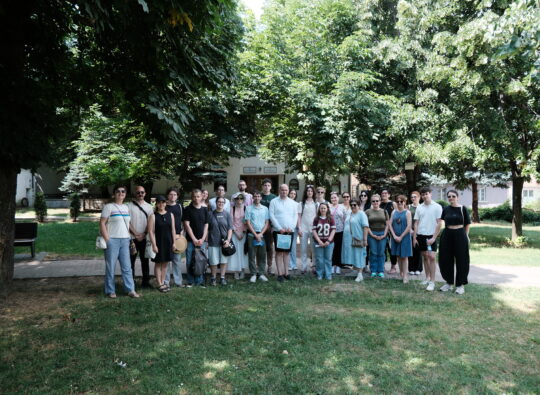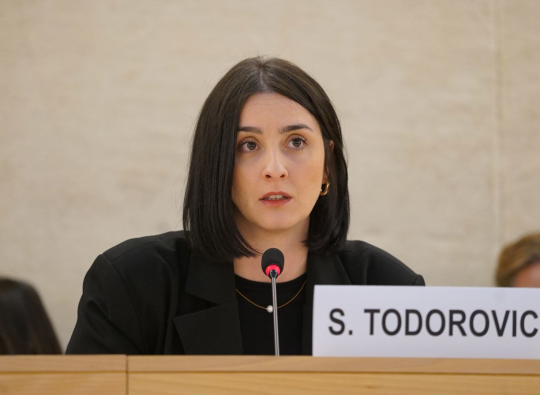
A group of thirteen young activists from Serbia visited the ruins of the camp, while Jovana Kolarić, researcher of the Humanitarian Law Center, held a lecture on the spot on deportations and camps for Bosniaks. This visit was also joined by Ružica Marjanović, a professor of literature and activist from Užice, who told when and how she found out about this camp, what feelings it caused in her and how she tries to spread awareness about the existence of such a place of suffering.
“When I found out about this place, I was shocked by the fact that I was sitting ten kilometers from here and preparing for my final exams when all this was happening, and I didn’t know anything. And that was a blow to my head, because I claimed for some other terrible events in other historical periods, that people must have known, and they claimed that they didn’t. In a way, we are all responsible for what we found out later, not when it happened. At least we have a duty to mark the places where people died”, Ružica Marjanović shared.
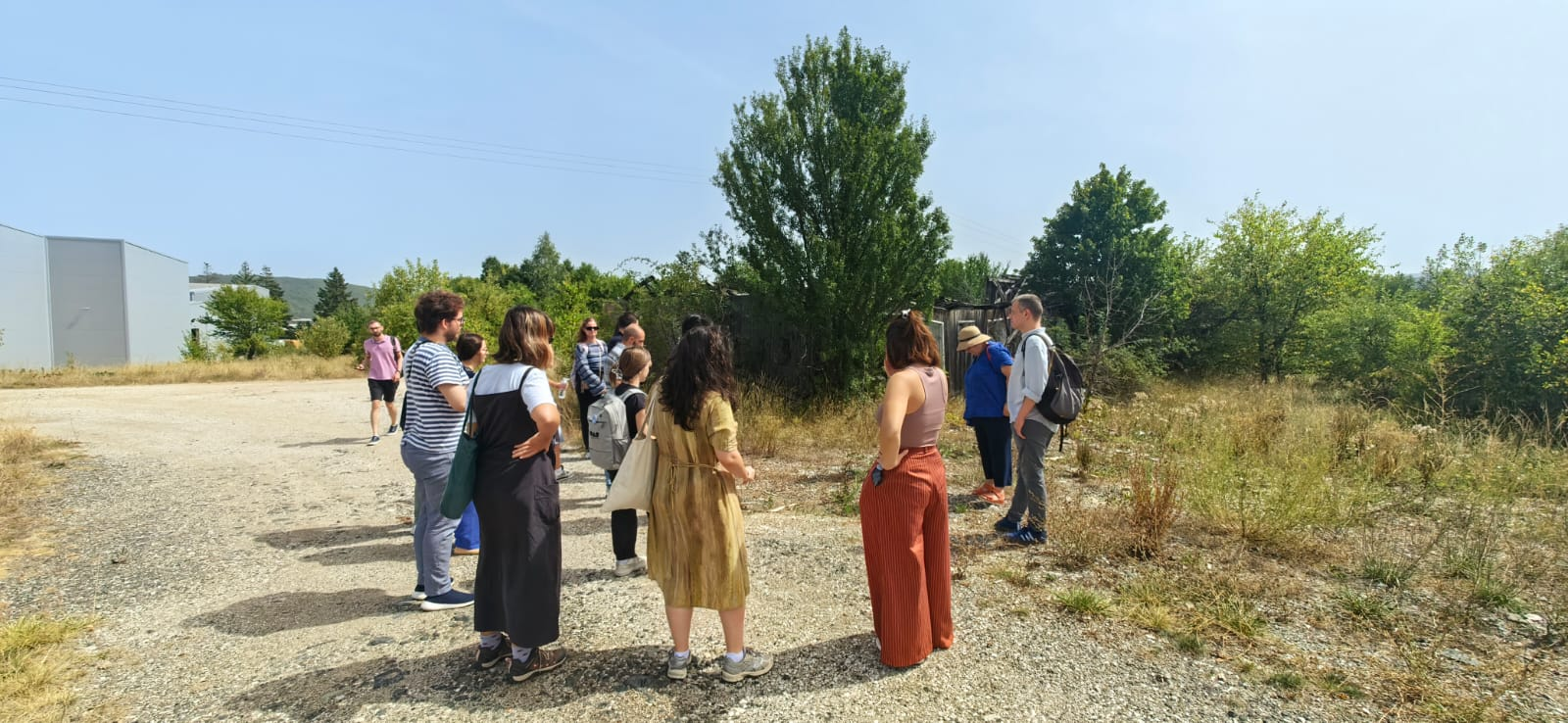
The abandoned barracks of the former construction company Planum, in the village of Šljivovica, served from August 1995 to April 1996 as a place of detention for Bosniaks who were forcibly brought to these facilities after the fall of Srebrenica and Žepa. A total of 350 people passed through this camp, who were exposed to inhumane conditions and physical and psychological torture. As a result of these conditions and torture, two detainees died. To this day, no one has been held accountable for the crimes in this camp. The location of the former camp is not marked in any way.
The visit was organized as part of a wider campaign to visit unmarked places of suffering in Serbia from the war period of the 1990s, with the aim of raising the awareness of Serbian citizens, especially young people, about the existence of such places, and with the aim of marking places of death in Serbia that are insufficiently known and talked about.
*This visit was realized within the project “Serbia at war / Serbia resistant to facts”, which was realized with the financial support of the representative office of the ProPeace organization in Belgrade.