In addition to exchanging experiences and various models of cooperation, the project develops practical tools and recommendations for institutions and contributes to empowering young people to develop and lead effective conflict transformation processes and initiatives that foster inter-ethnic cooperation.
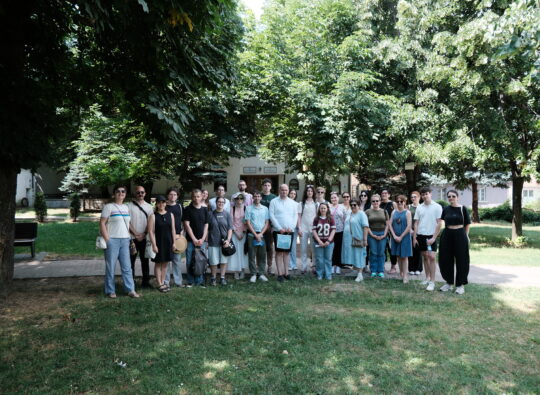
The visit program took place in several Croatian cities, allowing participants to gain a comprehensive insight into inter-ethnic cooperation and ways of overcoming divisions in the country, as well as the work of civil society and arts organizations promoting reconciliation.
On the first day, we visited Vukovar and the Ovčara Memorial. We had the opportunity to see how the war continues to affect the community and the consequences it has left behind, but also to consider what we, as active citizens, can do to truly establish peace and overcome the divisions caused by the war.
Recognizing that Vukovar is not defined solely by division and conflict, we took part in a memorial walk that also offered us insight into contemporary life in the rebuilt city. We concluded the day at the European House Vukovar, where the organization’s work was presented to us.
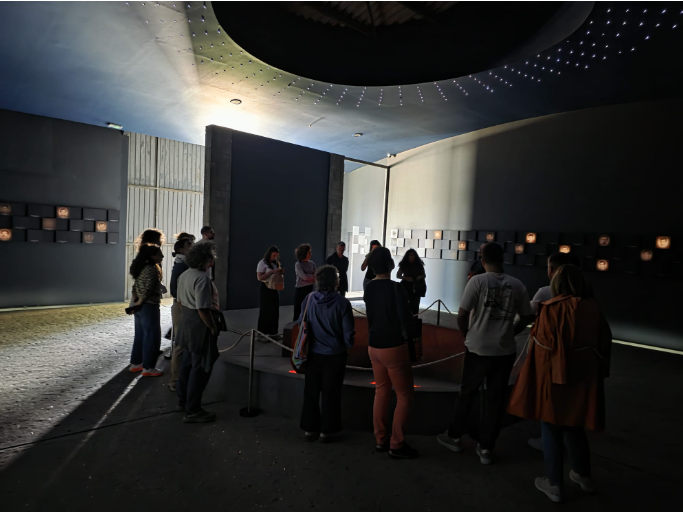
The next day, we spent time in Osijek. We were out in the field from early morning, starting with a visit to the Museum of Personal Stories; the museum takes a unique approach to themes of individual experiences of resistance, focusing its work on the individual and everyday life. It demonstrates how every person carries their own story, as well as an inner strength that often remains invisible to others.
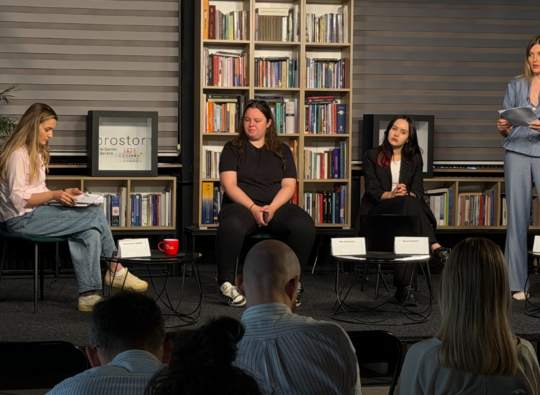
That same day, we also visited the Centre for Peace, Non-Violence and Human Rights in Osijek, an organization that has been active for many years and continuously aligns its work with current social needs. We had the opportunity to learn more about the monitoring of war crimes trials, as well as the social pressure that contributed to the peaceful reintegration of the Danube region at the end of the war in Croatia.
The visit continued in Petrinja, where we were hosted by Mario Mažić, one of the founders of the Youth Initiative for Human Rights in Croatia. Petrinja is a city marked not only by the events of the war but also by the 2020 earthquake, which further altered its urban and social landscape.
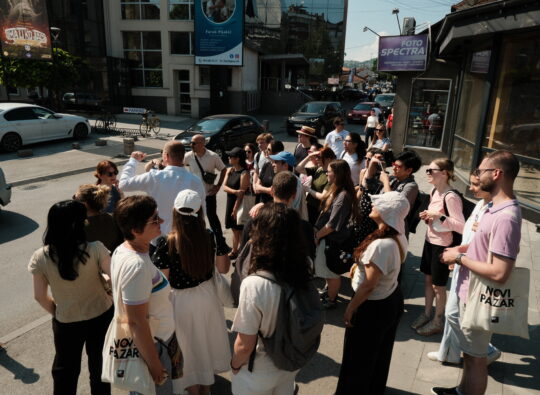
During a guided walk through Petrinja, Mario provided us with a broader socio-political context of Croatia, placing special emphasis on local specificities. This meeting offered us a deeper, multidimensional insight into the divisions that persist to this day.
The “No More Divided Societies” (NM:S) project—Strengthening Youth-Led Inter-Ethnic Solidarities—is implemented in partnership with the Youth Initiative for Human Rights Croatia, the organization Urban Gorillas from Cyprus, and the Centre for Peace and Conflict Studies at the University of Rijeka. The project aims to connect activists—particularly young people working to overcome ethnic barriers—through the mutual exchange of knowledge and cross-border cooperation.
Funded by the European Union. The views and opinions expressed are solely those of the author(s)/organization(s) and do not necessarily reflect the views of the European Union or the Agency for Mobility and EU Programmes. Neither the European Union nor the granting institution can be held responsible for them.