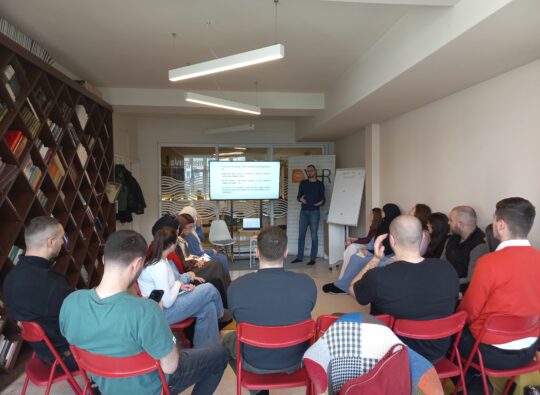
Representatives of the Initiative, Ivana Nikolić and Marko Milosavljević, presented to participants the recommendations formulated together with civil society organizations from the Western Balkans during 2025, within the Civil Society Forum—a side event preceding the Berlin Process Summit. These recommendations are intended for governments in the region, local civil society organizations, the European Commission and EU member states, partner countries of the Berlin Process, as well as regional and international bodies.
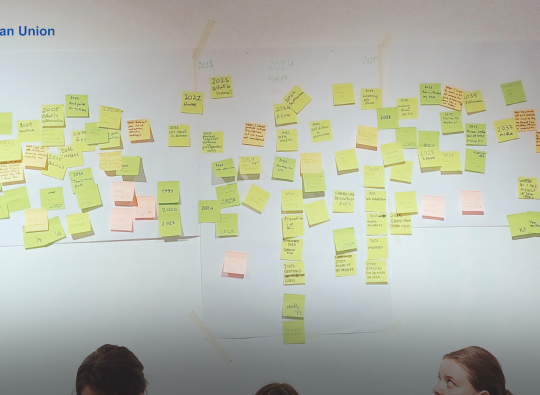
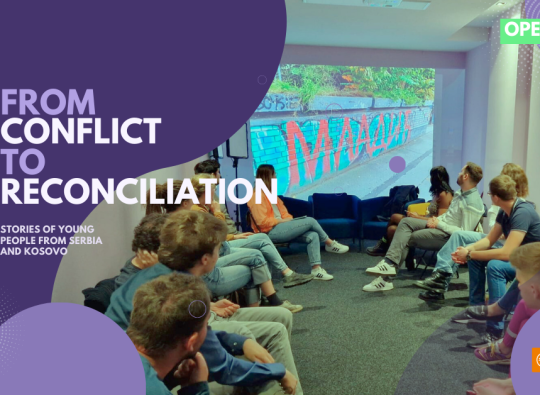
The main goal of the roundtable was to define concrete and applicable frameworks for monitoring the implementation of these recommendations, as well as to propose measures and activities in the areas of transitional justice, culture of remembrance, youth mobility, and regional cooperation.
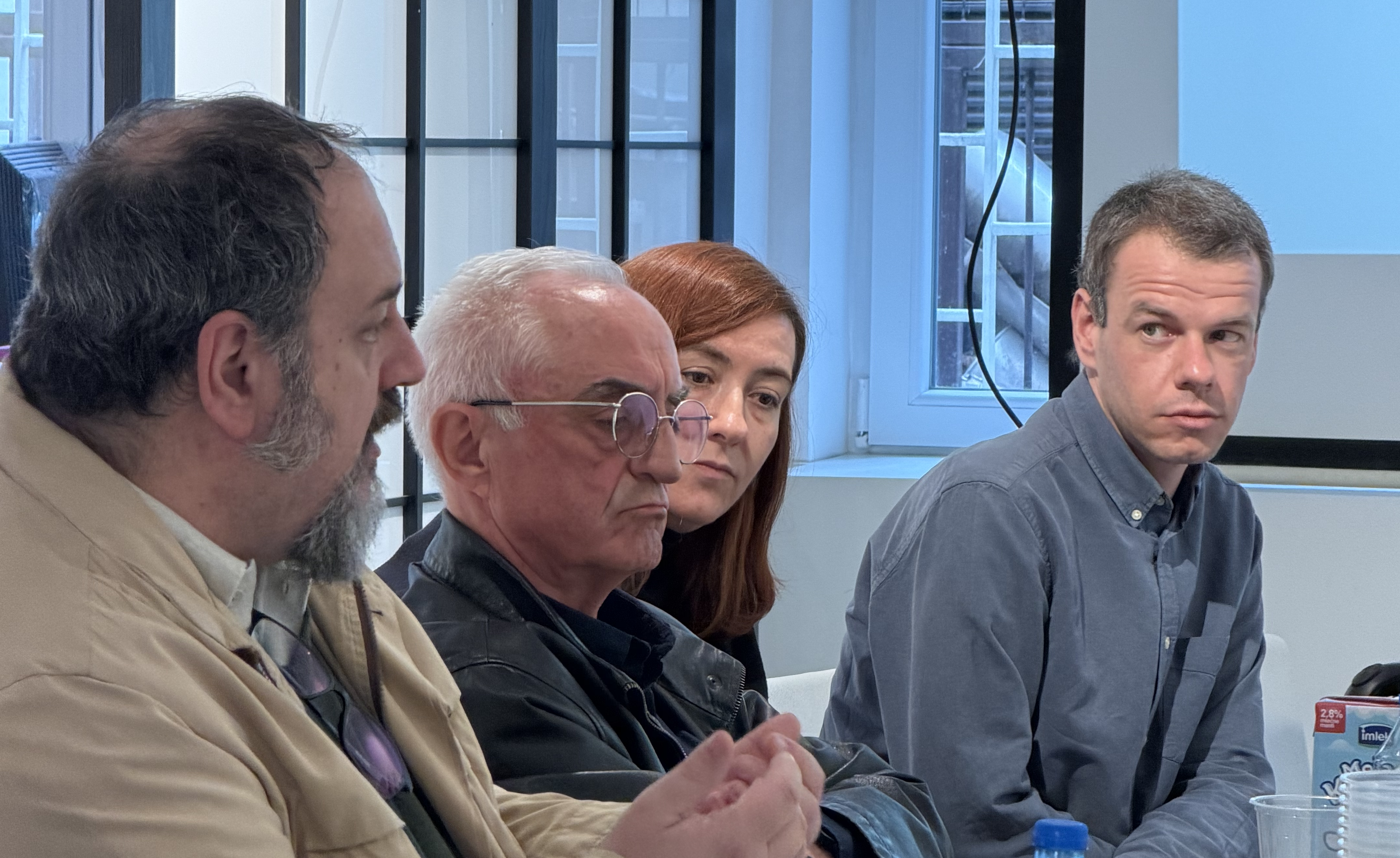
The event was attended by representatives of victims’ associations, civil society organizations working on dealing with the past, reconciliation, and intercultural exchange, as well as a representative of an independent body—the Office of the Commissioner for the Protection of Equality. Speakers at the roundtable included representatives of the victims’ families associations “Kosovo and Metohija Victims” and “Tear,” who emphasized the urgency of opening domestic and international classified archives, as well as fulfilling demands for the exhumation of known mass grave sites in order to accelerate the process of locating missing persons from the wars of the 1990s in Kosovo and Croatia.
Discussions also addressed insufficient investment in language learning programs and cultural exchange in the region, which were recognized as key to building trust. Participants pointed to political and social pressures on cross-border cultural events, further complicating regional cooperation.
A special focus was placed on youth exchange programs, which were highlighted as needing to be more inclusive and substantive, with greater space for confronting different perspectives on the past. The need to strengthen regional academic cooperation and develop joint initiatives that would help overcome dominant nationalist narratives was emphasized.
Participants also discussed weaknesses in existing mechanisms for regional reconciliation, noting that state policies often act as obstacles to their development.
One of the key topics was the development of an inclusive culture of remembrance. Participants highlighted the insufficient representation of marginalized groups in dominant memory policies, as well as the need to reform educational policies to include diverse perspectives – including the experiences of women, Roma, and the LGBTQIA+ community. A gender perspective was recognized as an essential element of all policies dealing with the past. It was also emphasized that judicial processes in this area need to be improved. One of the more concrete ideas discussed at the meeting was the establishment of a regional memorial center addressing the suffering of civilians across the entire territory of the former Yugoslavia.
Finally, participants stressed the importance of introducing clear reconciliation indicators into Serbia’s European integration process, while warning of ongoing issues such as the denial of war crimes and the glorification of perpetrators, which directly affect bilateral relations between countries in the region as well as the position of victims’ communities.
It was concluded that without systematic monitoring and political will to implement these recommendations, the reconciliation process will remain limited in scope, despite the existence of strong initiatives within civil society.
The discussions were carried out with the support of the British Council as part of the project “Advocacy and implementation of the recommendations of the Civil Society Forum within the Berlin Process Summit 2025.”