The flower of Srebrenica (“Memory” flower) is a visual symbol of the suffering of Bosniaks in the genocide in Srebrenica. It consists of three elements: the white color of the petals represents the innocence of the victims, the green color in the center signifies hope, while the 11 petals symbolize July 11, 1995.
In the Memorial Center of Srebrenica – Potočari, on July 11, a collective funeral will be held today and the remains of ten victims of the genocide will be buried. As the spokeswoman of the Institute for Missing Persons of Bosnia and Herzegovina, Emza Fazlić, previously confirmed for Fena, this year the victims who were between 20 and 56 years old at the time of the murder will find their final peace.
Among them are three young men in their early twenties, killed in the area of Srebrenica, Bratunac, Zvornik and Vlasenica. Their remains were found years after the war in several mass graves. The youngest victim to be buried is Senad Jusić, born in 1975, who was only 20 years old when he was killed. His remains were exhumed only in 2022 at the site of Kameničko brdo. The oldest among this year’s victims who are being buried this year is Ramo Dautović, born in 1939. His remains were found in 2001 in the Kamenica-Cančari mass grave.
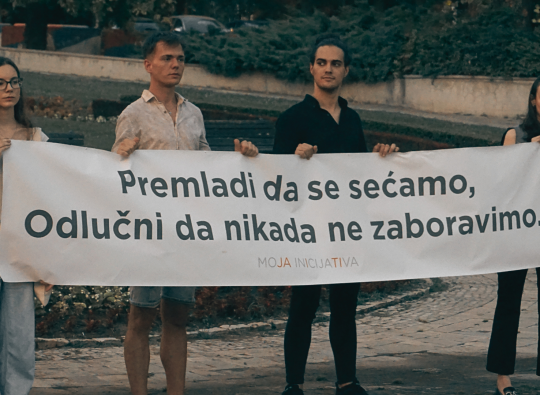
We invite citizens to join us at the commemoration of the victims tonight from 8 pm on Trg Republike in Belgrade, where we will light candles in a dignified manner to mark July 11 in Serbia as the International Day of Remembrance for the Victims of the Srebrenica Genocide.