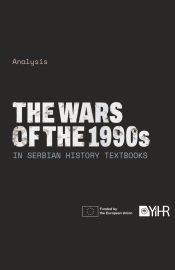
The analysis before you contains an overview of the content of 16 history textbooks, nine for elementary schools and seven for high schools and gymnasiums, which address the period of the breakup of Yugoslavia during the 1990s, namely the armed conflicts in Slovenia, Croatia, Bosnia and Herzegovina, Kosovo and the period of NATO bombing.
The focus of the analysis is on war crimes, the space that facts established before domestic and international courts have or do not have in history textbooks. The content of the analysis is divided according to the pre-war and war periods, and in particular the content of textbooks concerning Srebrenica genocide, crimes during Operation Storm, and the presentation of personal memories of people who had war experience, either as victims, witnesses, or who participated in rescuing other people during the war, are examined.
The analysis shows that the imbalance in presenting data on the suffering of the population depending on the nation/ ethnic group they belong to is still present, but to a somewhat lesser extent when it comes to victims who are Croats and/or Bosniaks. In some cases, victims from these two nations are mentioned, mainly in the context of the total number of victims, or in the context of war crimes that were so massive that it was not possible to avoid their suffering, as was the case with the Srebrenica genocide.
You can read the analysis “The Wars of the 1990s in History Textbooks in Serbia” in English here.
Analysis “The Wars of the 1990s in History Textbooks in Serbia” was funded by the European Union. The content of the report is the sole responsibility of the Youth Initiative for Human Rights and does not necessarily reflect the views of the European Union.