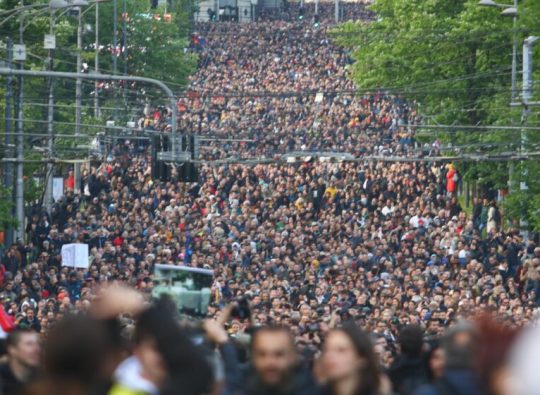
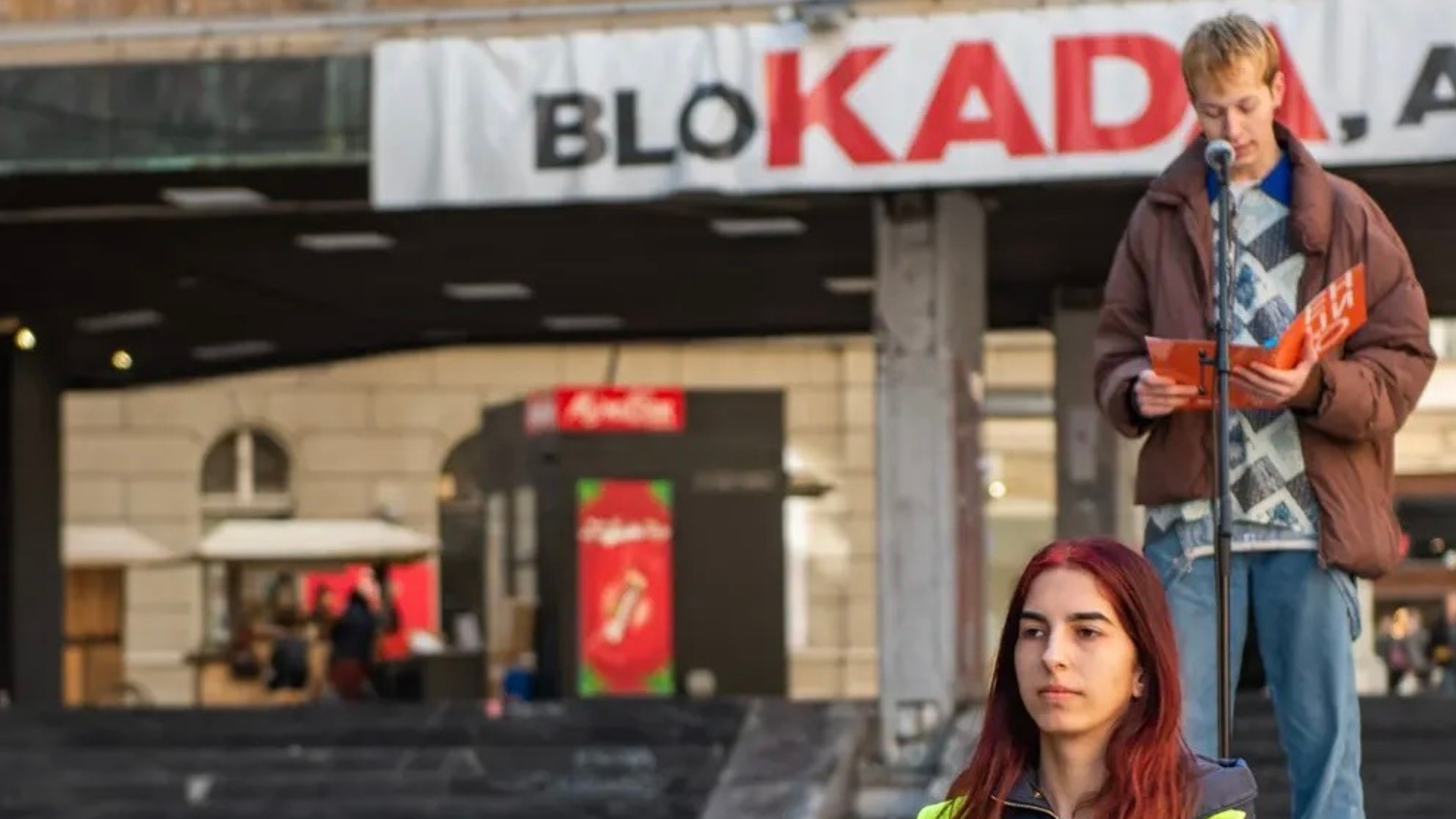
The gathering began on the plateau in front of the Faculty of Philosophy, where activists of the YIHR Serbia addressed the assembled citizens. Activist Aleksandar Milanović compared the tragedy in Sarajevo to the tragedy in Novi Sad, in which 16 people were killed when a canopy collapsed at the Railway Station:
“Once again, the same pattern, where systemic negligence and corruption took a young life, and on a section of track that did not have an usage permit.”
“High school students and university students have taken to the streets. They are marching and protesting against crime, ethnonationalism, and corruption,” Milanović said, sending a message to the citizens of Sarajevo: “We want them to know that we share the same struggle. That we share the same anger, but also the same hope that a different kind of society is possible. A society in which lives are not lost due to negligence and corruption. A society in which accountability is not an empty word.”
Ognjen Ćirić program assistant at YIHR Serbia said that the tragedy in Sarajevo concerns all of us: “The tragedy in Sarajevo did not affect just one city – it affected all of us who know what everyday life looks like, how an ordinary day can change in a second.”
“Today we stand here, in Belgrade, but we are not speaking from one city to another. We are speaking as people to people. Belgrade embraces you tightly, today and every other day. Sarajevo is the people we stand with and will continue to stand with – with our hearts, in our thoughts, and in solidarity,” Ćirić stated.
Dalia Koler, program coordinator at YIHR Serbia recalled that it was precisely on February 28, 1996, that the siege of Sarajevo ended:
“Sarajevo is a city that emerged from a siege 30 years ago. Thirty years since the end of four years of shelling, darkness, and hunger. Thirty years since the moment when the world should have remembered what it means to leave a city alone.”
“I felt a personal need to express solidarity with the citizens of Sarajevo. It deeply pains me to see any city wounded, and I am especially sensitive when it comes to Sarajevo,” said one woman from Belgrade.
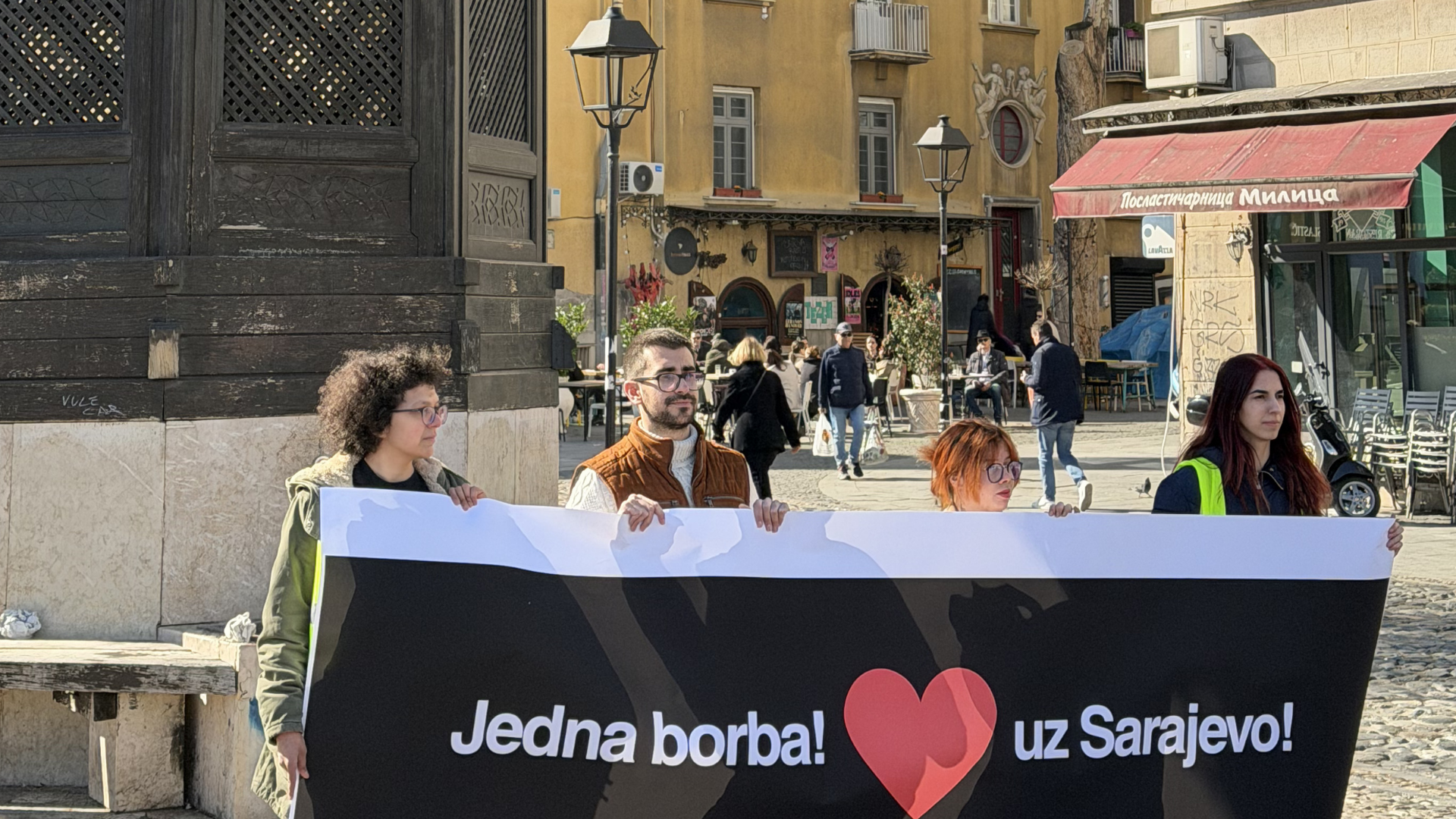
After the speeches and a minute of silence, the gathered citizens began a walk to the Sebilj fountain, a gift from the City of Sarajevo to Belgrade in 1989, where they laid white roses in memory of the victims of the Sarajevo tragedy.